
Groundbreaking new study aims to examine neurodivergence in agriculture
Posted 7 September
鈥淚f I can help people find that community, find 鈥榯heir tribe鈥� and likeminded people 鈥� if I can reduce that loneliness and let people know they aren鈥檛 the only person struggling with these issues - that鈥檚 a good thing.鈥�
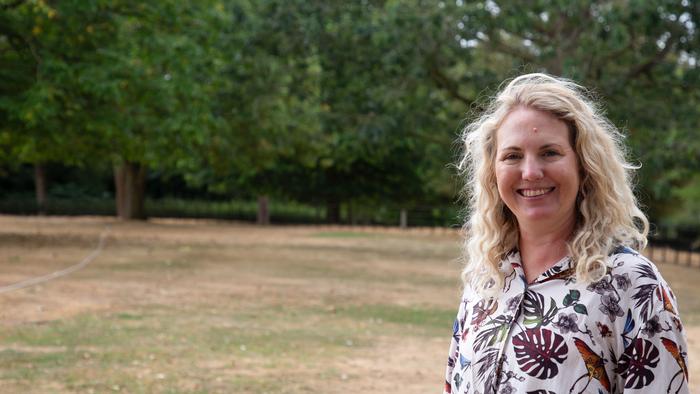
An award-winning researcher is set to draw upon her own lived experiences - and an ever-growing rural network - as part of a groundbreaking study of neurodivergence in agriculture.
During lockdown, agronomist and soil advisor Karen Fisher, from Ludlow, was diagnosed as having ADHD. The discovery set her on a path that let to her setting up both her own consultancy and a network for neurodivergent people in food and farming.
Now, she hopes to begin a PhD examining neurodiversity in agriculture – and believes the groundbreaking work could tackle loneliness and stigma among rural people with neurodiversity, and offer the food and farming industries tools, workshops and techniques to help harness the hidden strengths of a neurodivergent workforce.
A Harper Adams graduate, Karen has more than two decades of experience working in agriculture – having held roles with AGRII as an Environmental Specialist and agronomist before joining the Soil Association’s Farm and Land Use team.
However, it was a chance discovery just over half a decade ago that led to her growing interest in neurodiversity and agriculture.
She said: “I was diagnosed as having ADHD in lockdown, aged 39.
“Like a lot of people, I had a fairly narrow idea of how it presented at first, but I had some coaching, did a lot of research into it and realised how much there was to discover.
“From that, I decided to retrain alongside my agricultural advisory and agronomy side to work with individuals who are neurodivergent, doing coaching, training and advocacy through my company .
“The two worlds collided really – and anecdotally, there are more individuals who identify as neurodivergent working within the land-based sectors than in many others.
“I realised that my passion for sustainable farming and food systems and my interest in human behaviour and nervous systems and different neurotypes could come together.
“For the past couple of years, I have carried on doing the farm advisory side, but also I have been coaching individuals, delivering training and workshops for people in rural industries around neurodivergence, nervous system regulation - as well as co-founding the Rural Neurodivergent Network.”
The Network aims to bring people with neurodivergence together and build a supportive community – and has proved a huge success through word-of-mouth connections, despite being set up only in January this year.
Now, Karen aims to draw her wealth of experience together and to set out on a multi-year PhD project examining people’s experiences of neurodiversity in agriculture.
She added: “Hidden talent is a huge part of it, because historically the medical model meant that for neurotypes to be diagnosed, you look at the things people struggle with, the deficits: but actually, on the flipside of that, there’s different ways that people work, bringing different strengths.
“Not to undermine the medical model, but there are lots of those strengths we need in farming and agriculture for innovation and transitioning the way we’re farming. I think we struggle to attract and retain individuals in the industry anyway so I want the PhD to be able to get people’s experiences of that.
“That could be people who are self-diagnosed, or actually diagnosed – I want to hear their experiences, what they struggled with, what their strengths are, what would help them, what accommodations they need, what could be done within the industry to support individuals.
“It could help people feel less worried about telling employers - or to advocate for things which would make doing their work easier for them, such as clearer communication and instructions.”
Karen admits that combining her working life, her consultancy, and her PhD will be challenging, both in terms of workload and financially.
However, she adds: “One of the positives I see in ADHD individuals like myself is that impulsiveness is a trait diagnosed with ADHD, but actually I have found that for myself and a lot of other individuals within farming, that impulsiveness hasn’t been a bad thing.
“I follow my passions and take a risk, and this just feels like the right time, with my two passions coming together, to have this opportunity at Harper Adams to do this pioneering work.
““I have received a bursary for 75 per cent of my PhD course fees from the and my plan is to go self-employed and do the PhD alongside my work, but for that, I need some additional funding support.
“However, because I have got more than 20 years of experience behind me, I will also be creating some tangible outputs which can feed back into the industry – being able to pilot workshops, materials and tools and even build the Rural Neurodivergent Network.
“If I can help people find that community, find ‘their tribe’ and likeminded people – if I can reduce that loneliness and let people know they aren’t the only person struggling with these issues - that’s a good thing.”
People wanting to find out more about Karen’s PhD, or how they can support her work, can contact: harvesting.potentials@outlook.com
Most popular
- Fresh opportunities to study in Australia and New Zealand unveiled
19 October -
 Graduate wins both British Farming Awards and Farmers Weekly Ag Student of the Year prizes
16 October -
 Honorary Degree celebrates Archers star's 40 years illuminating rural life
14 October -
 Scale of rural crime underestimated, expert tells MPs
15 October -
 Smart data disease prediction project earns engineer prestigious award
12 October -
 Graduate planning to transform Shetland farming named Farmers Weekly Ag Student of the Year
2 October