

 Agricultural Autonomy Institute joins 无码动画's 125th anniversary celebrations
A leading American expert in agricultural autonomy has paid tribute to 无码动画 as it marks its 125th anniversary.Dr Alex Tho …
Posted 22 October
The National Institute of Poultry Husbandry at 100 - rediscovering an eye witness account
3 November 2026
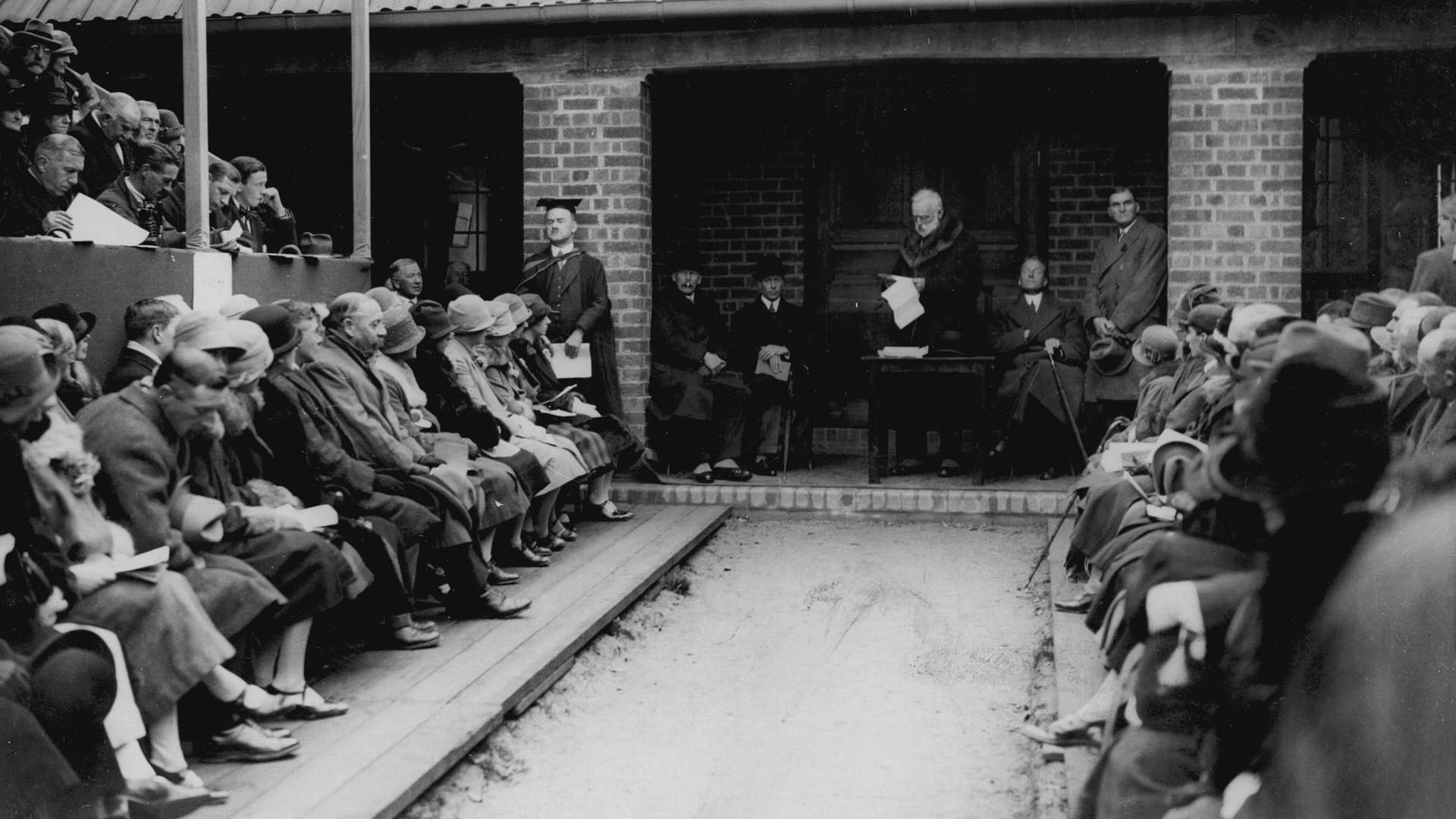
To mark the Centenary of the opening of National Institute of Poultry Husbandry at Harper Adams, we’re sharing a contemporary account of the event.
The account was written for The Cat-A-Mountain, which was the Harper magazine at the time, 99 years ago in 1927.
It was rediscovered recently by University Archivist, Dr Catherine Baxter.
It examines the preparations for the day, which saw His Royal Highness The Duke of York – who would later become King George VI – welcomed to the institution to open the groundbreaking institute, as well as detailing the visit itself.
“November 3, 1926 will long remain a ‘Red Letter’ day in the annals of the College, for on this date His Royal Highness the Duke of York visited the College for the purpose of opening the National Institute of Poultry Husbandry.
“Such an event was bound to create a good deal of enthusiasm and wonder among those associated with the College, as well as the villagers and residents in the three counties served by the College, viz., Salop Stafford, and Warwick, and it was a difficult matter to talk about any other subject a few days before and after the event.
“As soon as the Autumn term commenced, preparations for the reception of His Royal Highness were got under way. Much had to be done in the general tidying up of paths and buildings, the trimming of hedges, and the hundred and one other jobs which are easily noticed by those responsible for the well-being of the plant. Fortunately, every student entered into the work in real earnest, realising that there could only be one ‘November 3’ in the life of the institute. The spare hours of staff and students were devoted to putting finishing touches to stock and plant, thus making it a ‘paradise for poultry’ – a remark of one of the visitors overheard by the writer.
“Of course, everybody concerned wondered whether it would rain on the appointed day for the previous fortnight. Rather than take any risks, it was decided to erect three large covered stands capable of seating 800 persons, and this apparently frightened the rain and ensured a very fine spell of sunshine from noon onwards.
“Well, the day arrived, and soon after breakfast visitors and pressmen began to arrive from all parts of the country. The opening ceremony was listed for 2pm, and long before this hour every member of the staff, and every poultry and agricultural student were in their places awaiting the arrival of the Duke. Reports varied as to the size of the crowd, but the total could not have been far short of 2,000.
“Fortunately, everything worked according to plans, there being no hitch in the arrangements throughout the whole programme.
“Punctually, at 2.05pm, the Duke arrived and was greeted by the late MR WH Lander, Chairman of the Governors, [College Principal] Dr Crowther, and the Hon. Walter Guinness, Minister of Agriculture.”
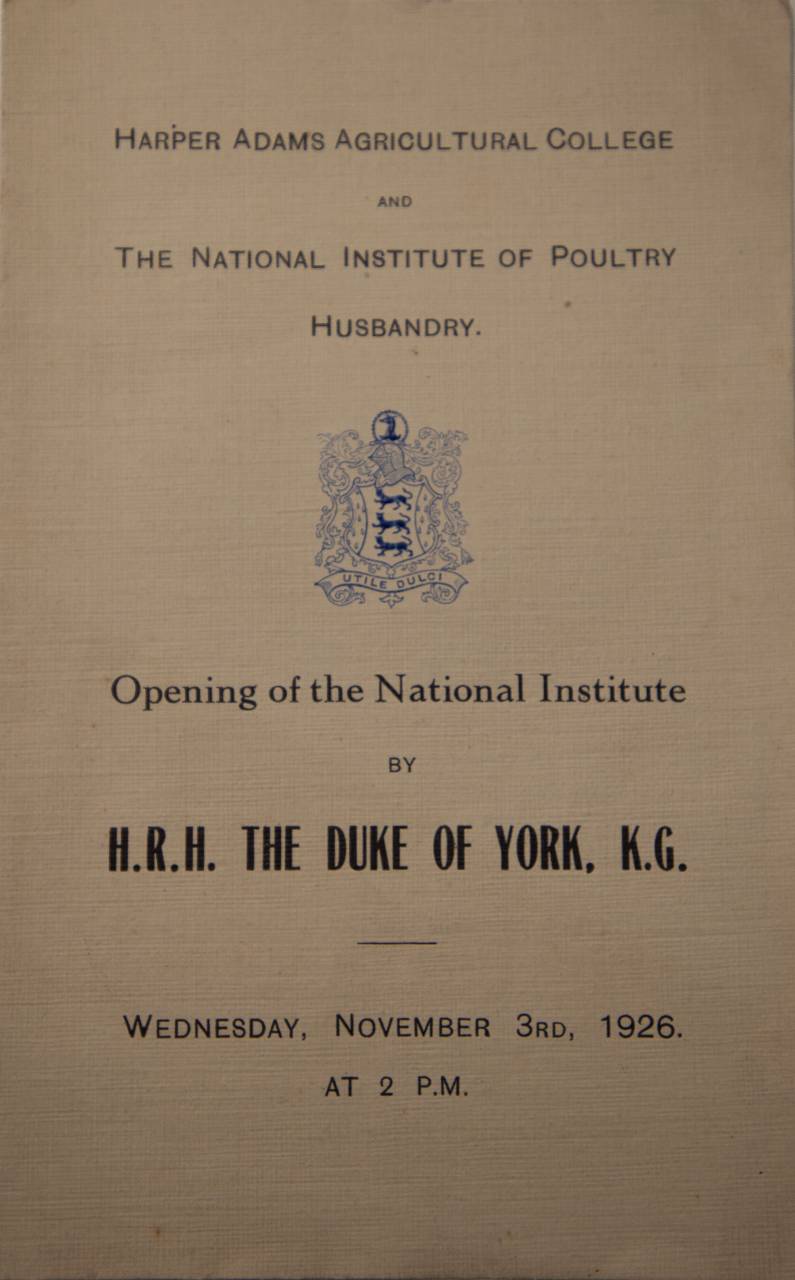
The writer goes on to detail those presented to the Duke, and to note speeches were made, including by the Duke himself, but adds: ‘Unfortunately, space will not allow the reprinting of these.’
“His Royal Highness was then handed a gold key, bearing the inscription ‘National Institute of Poultry Husbandry’ and an emblem of the industry, by Major HP Maule, the architect, with which the Duke opened the main doors of the administrative building.
“He then proceeded on a tour of inspection of the buildings and plant, under the guidance of [the Vice-Chairman of Governors] Lieut.-Col HP Sykes.
“During his inspection of the poultry plant, His Royal Highness was particularly attracted by an alarm clock, located in the multiple unit house, and which is used to induce hens to rise early. It is set for an hour before daybreak, and is connected with a mechanism which turns on the electric light. The purpose of the experiment is to find the effect of the extra hour’s illumination on egg production. It is known that the additional period of light results in more eggs being produced: what is sought to discover is whether enough eggs are laid to cover the cost of the current.
“The various breeding pens and laying houses were inspected, whilst in a brief visit to the lower part of the plant, where the small live stock is housed, the Duke was greatly interested in the rabbit department, one Angora in particular engaging his attention.
“Walking from here to the College, His Royal Highness inspected the main building, and after partaking of light refreshments in the Principal’s room, departed at 3.15pm, amid hearty cheers, for Stafford. He travelled in a closed car and was accompanied by the Minister of Agriculture.
“After His Royal Highness had departed the Institute, plant and College were inspected by a large percentage of the visitors, and many expressed their appreciation of the general lay out of plant and quality of stock.
“Tea followed in the large lecture hall, thus bringing to a close ‘the end of a perfect day.’”
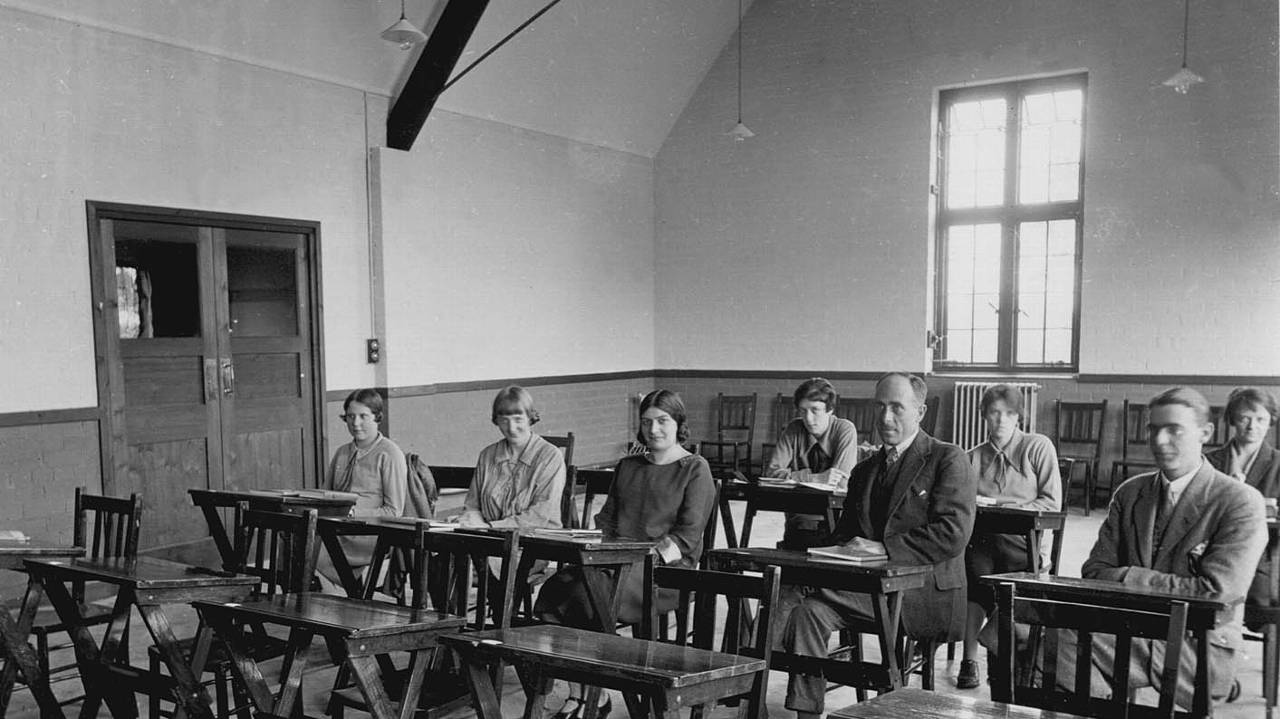
(Students in the large NIPH Lecture room, circa 1929)
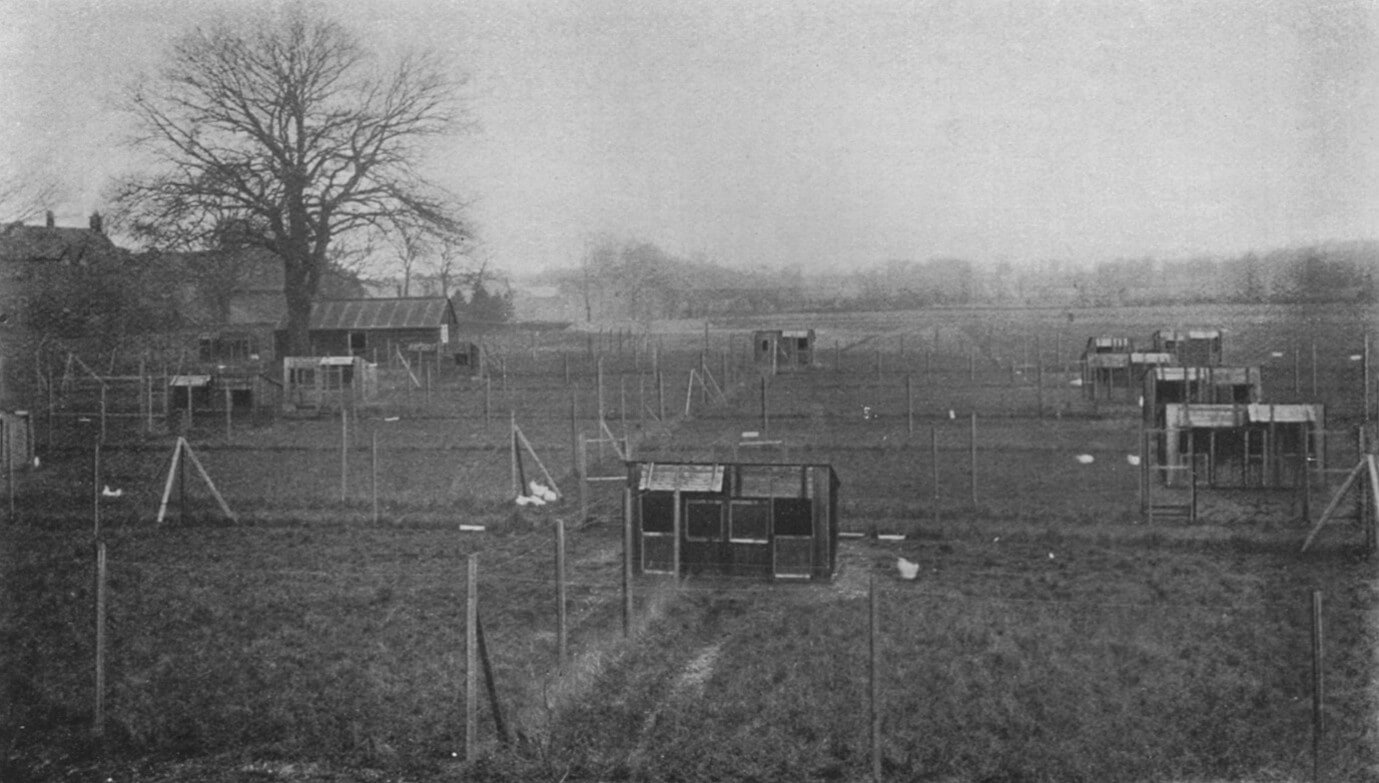
(Egg laying trial pens for various poultry breeds, 1916/17)
Related Posts
Agricultural Autonomy Institute joins 无码动画's 125th anniversary celebrations
A leading American expert in agricultural autonomy has paid tribute to 无码动画 as it marks its 125th anniversary.Dr Alex Tho …
Posted 22 October
 Sky's the limit: Helen joins MP's fundraising parachute jump
A charity skydive by a 无码动画 Business Development Consultant has helped raise more than £16,000 for a new cancer cen …
Posted 21 October
 From dairy farm - to farm vet
Growing up on a dairy farm played a huge part in shaping Harriet Brimacombe’s ambition to become a vet. Now, as she prepares to …
Posted 20 October
 Listen: Archers anniversary marked with future of farming discussion on BBC radio
With BBC Radio Four marking the 75th anniversary of the Archers this year, Farming Today has taken the opportunity to look forwards this wee …
Posted 16 October