

 Showcasing Harper Adams at the UKACT Annual Conference 2026
By Dr Ellen Williams "Harper Adams are very well represented this year, aren’t they?"What a fabulous thing to hear at the UKACT A …
Posted 28 August
Showcasing Harper Adams at the UKACT Annual Conference 2026
By Dr Ellen Williams "Harper Adams are very well represented this year, aren’t they?"What a fabulous thing to hear at the UKACT A …
Posted 28 August
Confused meerkat or sleek workshop host? A look into the BIAZA research conference 2026
24 July 2026
As a Professional Member of the British and Irish Association of Zoos and Aquariums (BIAZA) and a Member of their Research Committee the BIAZA research conference is one I always look forward to.
This year it was doubly exciting - because it was being organised by Jemma Dias and her amazing team at one of the zoos I collected my PhD data at, Colchester Zoo.
Colchester Zoo is home to my favourite bull elephant, Tembo, and in my opinion, an elephant who wins the award for most beautiful eyelashes by a country mile - Zola. It was hosted in conjunction with the Colchester Institute, which kept us fed and watered perfectly throughout.
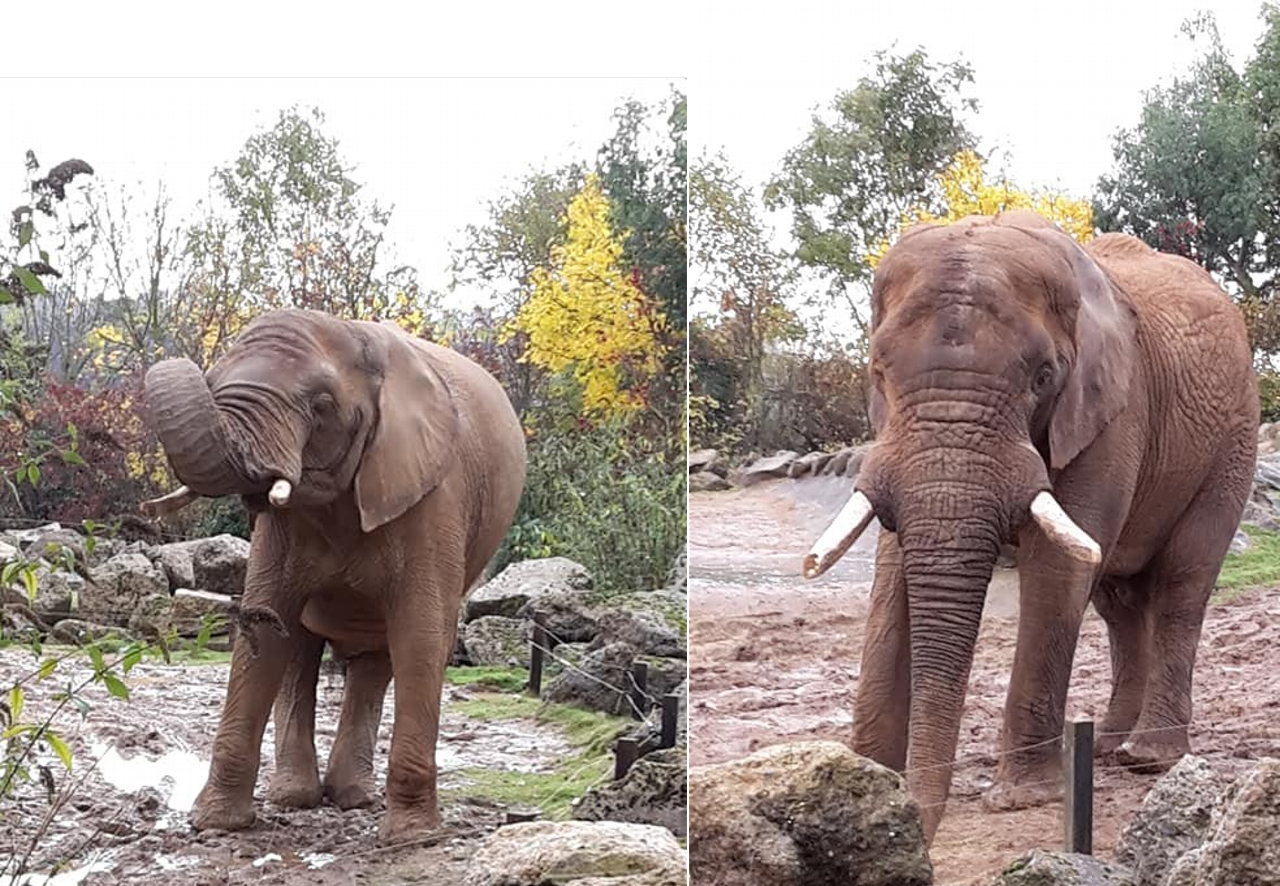
Zola and Tembo,gorgeous elephants!
At the two-day conference there were loads of fabulous presentations and posters. The agenda was packed with a range great talks including a brilliant keynote by Dr Ania Brown from EAZA, introducing the EAZA biobank and the advances of cryopreservation, frameworks for quantifying conservation benefits of EEPs, impacts of exhibit designs on visitor engagement and learning, supporting keeper driven research, personality assessments in elephants, using AI to understand big cat vocalisations, the impacts of contraception on animal behaviour and many, many others both the big and the small!
This year I was first author on a poster presentation and was also hosting a workshop with Lewis Rowden (BIAZA RC Chair) and co-author on two other presentations.
My poster was on a project I am currently working on with Professor Sam Ward, Professor Geoff Hosey and Dr Stefano Vaglio, validating indicators of positive welfare in callitrichids.
Callitrichids are small monkeys and research indicates they may be at increased chance of reduced welfare.
Developing indicators of positive welfare is vital to ensure we understand that animals are actively having good experiences, rather than just not having bad experiences, within zoological facilities.
Despite us all recognising the importance of positive welfare indicators, they are relatively underdeveloped compared to the more traditional negative welfare indicators. The poster was designed to advertise the project and gather interest in the research.
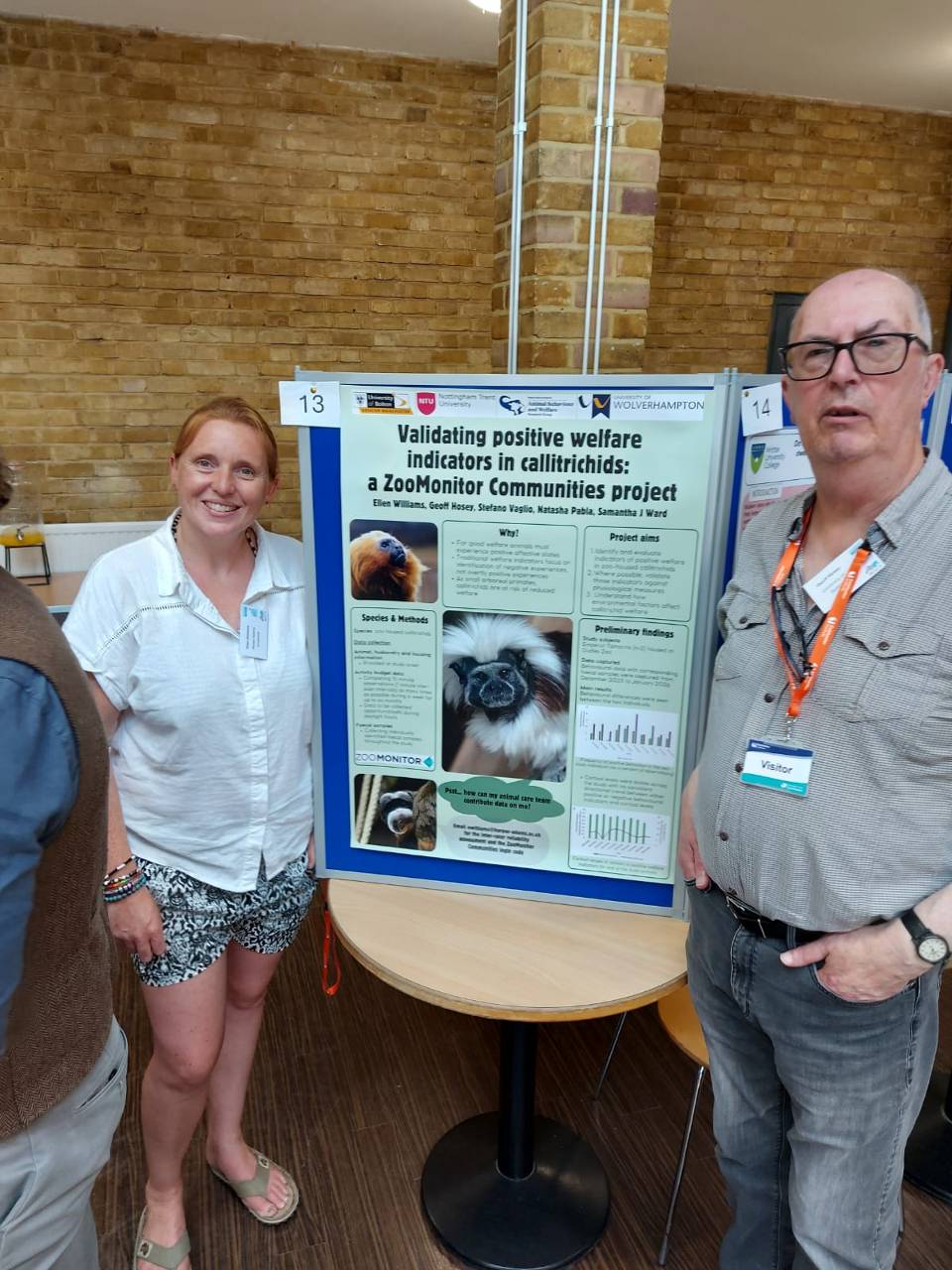
Prof. Geoff Hosey and I with our poster advertising our new project on callitrichid welfare indicators
The workshop was on day one. It was the usual enjoyable chaos that workshops bring (Have we loaded the right slide deck? Do we have pens? Have we got all of the resources?) but with the added joy of an oppressive heat wave! The theme of the workshop was on research priority and strategy development within zoos. Lewis and I created this as a workshop of two halves – drawing on discussions from two years ago, recognising that zoos and universities can work together to deliver great and impactful research and considering what zoos and universities need from research. We had some really fruitful discussions around the importance of research strategies and the differences between policies, strategies and projects and how they link in practice. More will be coming on this very soon from BIAZA!
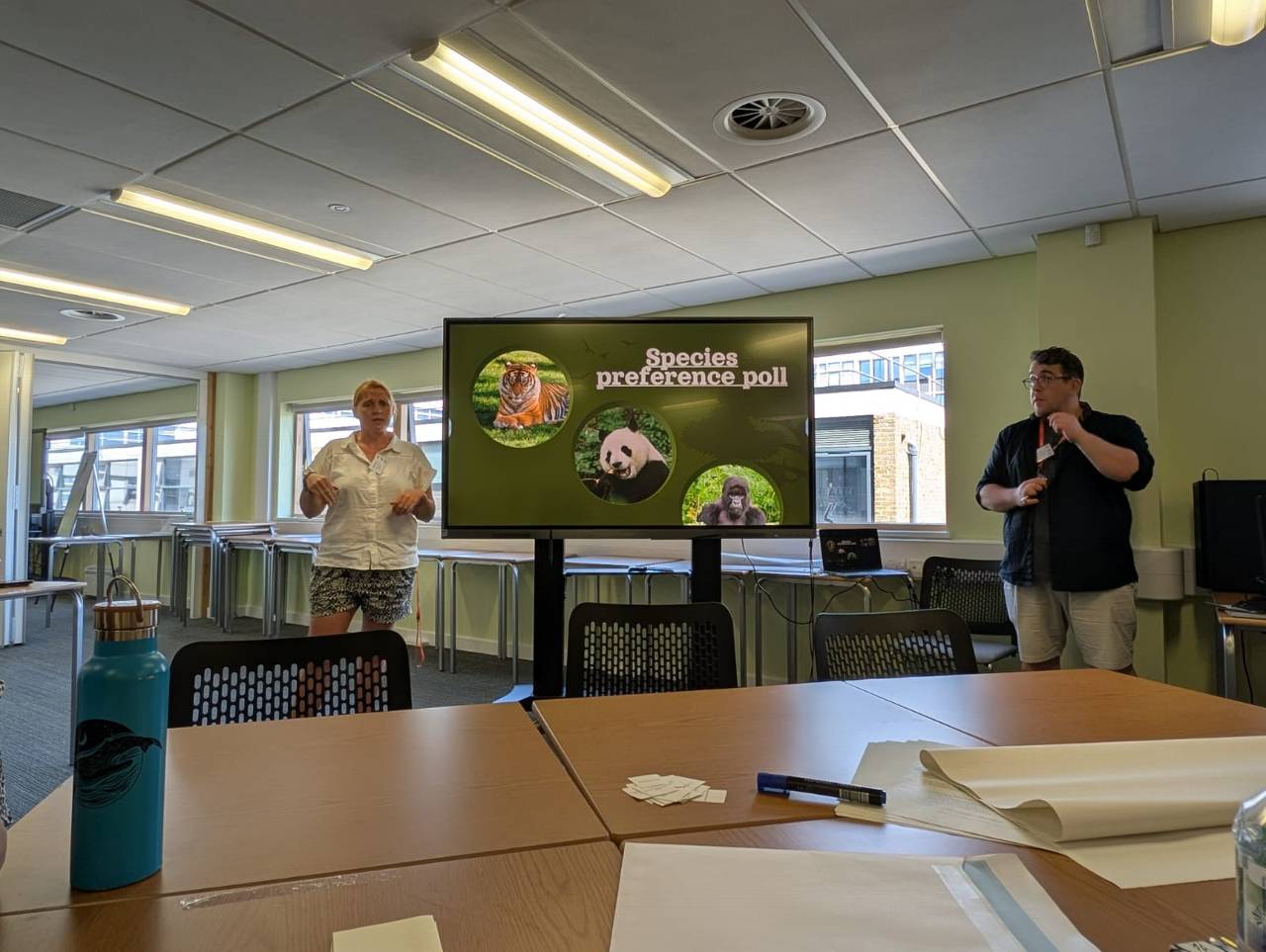
No one knows what I was doing here or why I was pretending to be a confused meerkat… but I am sure there was sense in the madness at the time!
Co-authoring presentations is really an excellent way to be at a conference… you get the joy of the conference without the sweat inducing fear of standing on the big stage. Although I didn’t entirely escape the stage as I was helping to organise the presentations so the pressure of making sure PowerPoints worked when they should was very much on!
Dr Aurelie Jolivald was presenting the next piece of work that I am involved in, again with Sam Ward and Geoff Hosey. We have been looking at the impact on breeding and birth patterns in carnivores when we move them from their wild latitudinal ranges as part of breeding programmes. As with the workshop, no spoilers here, as we are hoping this will be published later on this year (lets hope the second half of the year goes slower than the first!).
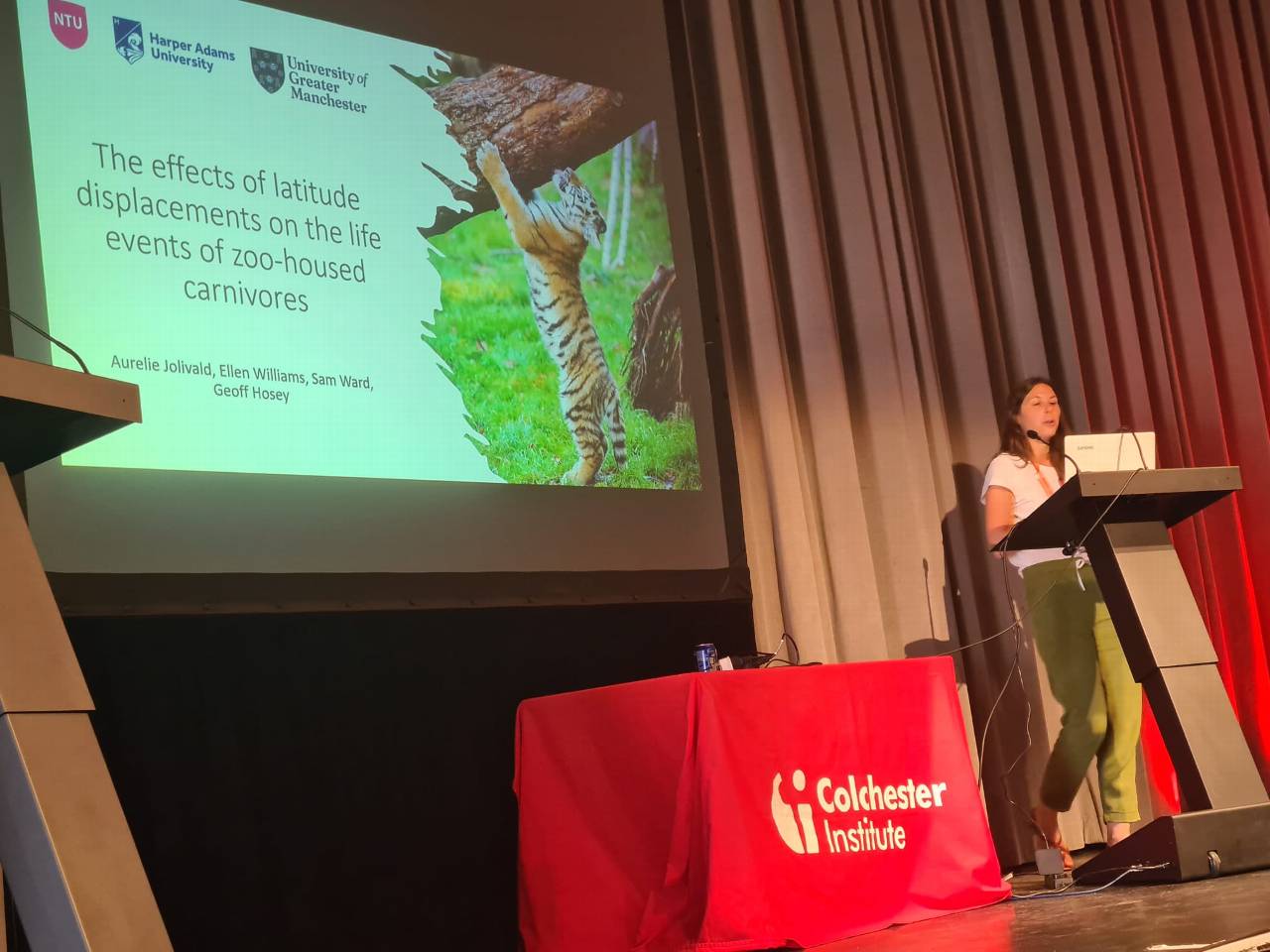
Dr Aurelie Jolivald presenting our research – lots of pretty graphs followed!
Saving the best for last… the highlight on the part of the research group, and myself as a supervisor, definitely came in the form of the end of the second day, when Dan Wright’s presentation was called out as a highly commended established researcher. Dan’s presentation was on his PhD research on a development of multi species qualitative behavioural assessment tools for use by citizen scientists (visitors) within zoos. Dan did an excellent job of describing this bit of his PhD, including his regret at giving visitors free reign to describe what the animals were doing! However the good news is that visitors actually really enjoyed it and were engaged with the process, so lots of scope for further developing this work moving forwards.
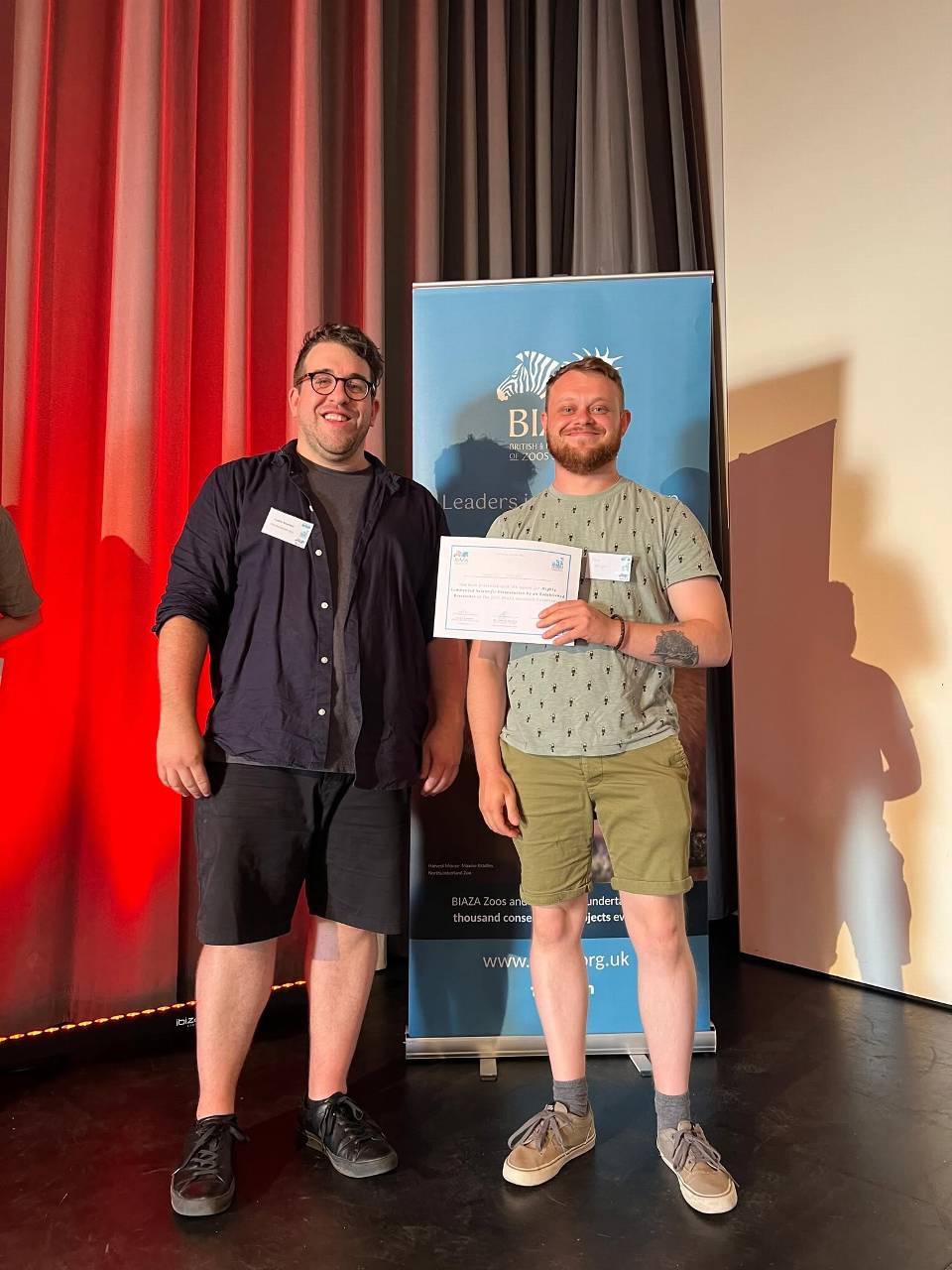
Dan being presented with his award by Lewis Rowden, BIAZA Research Committee Chair (Photo credit: BIAZA Research Committee)
Of course alongside the work there was lots of opportunity to catch up with friends and colleagues and develop ideas for new projects. Last summer, Prof Mark Rutter wrote us a blog on the importance of attending conferences for personal and professional development of staff, and I really cannot echo that enough. Staff and students get so much out of these opportunities, I just hope in this increasingly money depleted world that we don’t lose these chances, because so much good comes from scientific conversations at conferences!
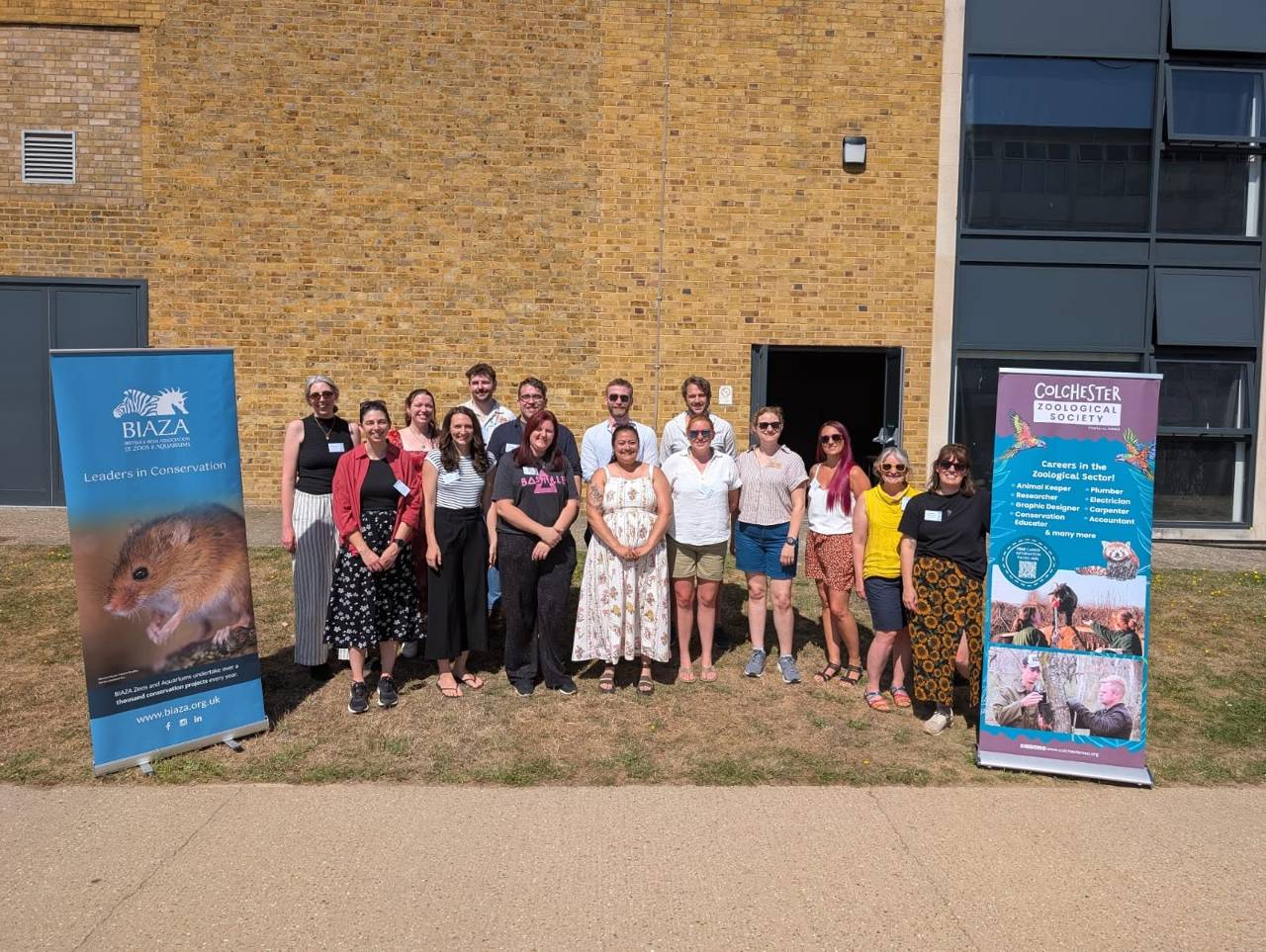
I am really honoured to sit on this amazing research committee – here we are all in all our sunshiny glory! (Photo credit: BIAZA Research Committee)
Related Posts
Showcasing Harper Adams at the UKACT Annual Conference 2026
By Dr Ellen Williams "Harper Adams are very well represented this year, aren’t they?"What a fabulous thing to hear at the UKACT A …
Posted 28 August
 Harper Adams colleagues forge research links with Halesowen College
Four members of the Animal Behaviour and Welfare Research Group (Dr Holly Vickery, Dr Ellen Williams, Jen Sadler and Alice King) had an exci …
Posted 22 June
Harper Adams colleagues forge research links with Halesowen College
Four members of the Animal Behaviour and Welfare Research Group (Dr Holly Vickery, Dr Ellen Williams, Jen Sadler and Alice King) had an exci …
Posted 22 June
 A 'good life' for pigs - and other exciting animal science research at BISAS 2026
Dr Holly Vickery attended the British and Irish Society of Animal Science (BISAS) Annual Conference in April. She has written about her …
Posted 3 June
A 'good life' for pigs - and other exciting animal science research at BISAS 2026
Dr Holly Vickery attended the British and Irish Society of Animal Science (BISAS) Annual Conference in April. She has written about her …
Posted 3 June
 PhD student visits the Knepp Estate in West Sussex
PhD student Sophie Rabone shares her experiences of visiting the Knepp Estate in West Sussex. You may have already seen Sophie's resear …
Posted 14 May
PhD student visits the Knepp Estate in West Sussex
PhD student Sophie Rabone shares her experiences of visiting the Knepp Estate in West Sussex. You may have already seen Sophie's resear …
Posted 14 May