This week is , a worldwide initiative that challenges stereotypes and misconceptions about neurological differences, while creating more inclusive and equitable cultures that celebrate differences and empower every individual.
At Harper Adams University, we want to ensure that every student feels supported. We offer a range of services, from mental health and wellbeing to disability, academic and learning support to help students achieve their full potential.
We spoke to our President, Daisy Douglas about her experience with neurodiversity as she received her ADHD diagnosis during her studies using our support networks.
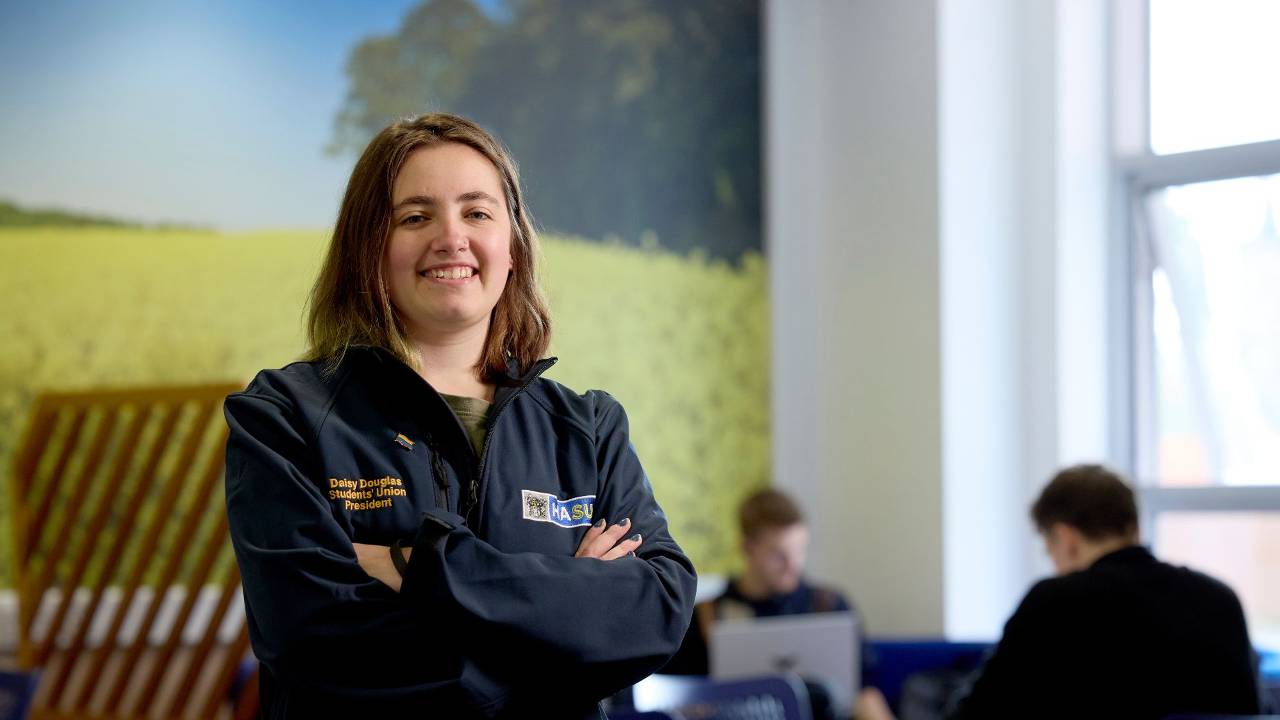
Daisy, can you tell us about your experience with Neurodiversity, and what lead you to seek support?
I was really struggling with workload and feeling motivated to do assignments or any work at all. Wellbeing had helped me look at anxiety and depression and though this was some of my struggles, there was something else holding me back. Both my brother and mum were diagnosed with ADHD a couple of months earlier than me and as I am most similar to them my mum encouraged me to get the assessment done. I was also interested to see what I could learn about myself.
So during my final year studying at Harper, in 2023, I decided to complete the assessment for ADHD in education. The support I received from both my course tutor, lecturers and the teams in student services have been amazing. I was already in a support to study so both the course team, learner support and wellbeing teams worked incredibly well together to make sure they were all on the same page in order to support me as best as they could. It was also a clear and easy process to do and, for me, happened relatively quickly.
How do you feel now that you have received your diagnosis, and the support that comes with it?
Now that I have this diagnosis it has helped me understand myself more, making me more self-aware and confident in my abilities.
I used to think that I wasn’t trying hard enough in things or putting enough effort in, but I now know that my brain works differently so needs some things to help it out. I mainly struggled with organisation and time management, processing and remembering things and my motivation to do things as I can get distracted easily without realising or get overwhelmed and not know where to start a task, leaving me to procrastinate.
For me now, it helps me to write things down as reminders and also gets stuff out of my head, as that can feel quite full and busy most of the time. I also allocate my time using my calendar, so I know when I need to do something, also breaking down big tasks into smaller ones. I still struggle sometimes and am always working on myself, both with and without support.
What advice would you give to anyone who was in a similar position to you about seeking support?
I would say go for it! There’s no harm in asking. The team at Harper are very supportive and never judgemental. They have helped so many students with various needs; even if you seek that support and don’t get the result you were expecting, the report that you receive after your assessment is very detailed and provides a lot of insight into yourself, your strengths and weaknesses, how your brain uniquely works.
Part of getting support and finding out about you is ruling stuff out as well as finding out answers. The Learner Support team and Wellbeing team are really good at helping you explore whatever it is that you need and supporting you with any outcomes, such as recommendations for exams.
You are not alone. There are more people than you realise who will feel the same way you do and the first step, though it can be scary, is to start that conversation. Whether it be a friend, member of staff you trust, learner support or even me.
As the Students’ Union President, how has your experience shaped your role?
Knowing this about myself has helped me in both my studies before I graduated and the job I do now as president.
We have done our best to create more welcoming environments in our venues by introducing a ‘Quiet Space’ at our events for people to take some time away from the crowd. This was brought in by our Vice President, Erin, this year and from the results of our survey can see how important it is to keep it going, while exploring how to do this further, including bigger events.
Other support for students includes our . This is new this year and has slowly taken off but this is a group that we want students to dictate, telling us what they need or would like as a group, which I can help facilitate as the current lead of that network. We also work closely with our exec members to support them with club & society needs and anything else that they require.
In terms of working in the , they are very supportive in making sure I have what I need to do my job to the best of my ability. I have had deadlines far in advance and notices in my calendar with due dates, as well as being able to record some meetings to look back on. It also helps me to see any notes from meetings, including my 1 to 1 meeting with the Director of the Students’ Union, Michael every three weeks, which gives me the opportunity to discuss any other needs.
It’s Neurodiversity Week – do you think it’s important to recognise this week, and why?
Absolutely! I think it’s so important because as well as knowing yourself, it’s important to understand other people and where there may be differences. I learnt a lot about myself in this process but also other people. ADHD, for example, looks so different to each person who has it and having that awareness or understanding of how someone sees and experiences the world can help you both to work better together, enjoy other people’s perspectives and allow others to understand you too.

 Blog: Commitment to Technicians to be set out at national Higher Education conference
The work 无码动画 has done to develop its technician community is to be set out at a national higher education conference thi …
Posted
Yesterday
Blog: Commitment to Technicians to be set out at national Higher Education conference
The work 无码动画 has done to develop its technician community is to be set out at a national higher education conference thi …
Posted
Yesterday